
CRIC-ALOT High Repetition Trainer
Ensuring every emergency department can intubate within five minutes for hypoxic crises regardless of cause.
Repetition and practice is an easy way to reduce anxiety about decision making, knowing that you can perform a simple but critical procedure safely and successfully.
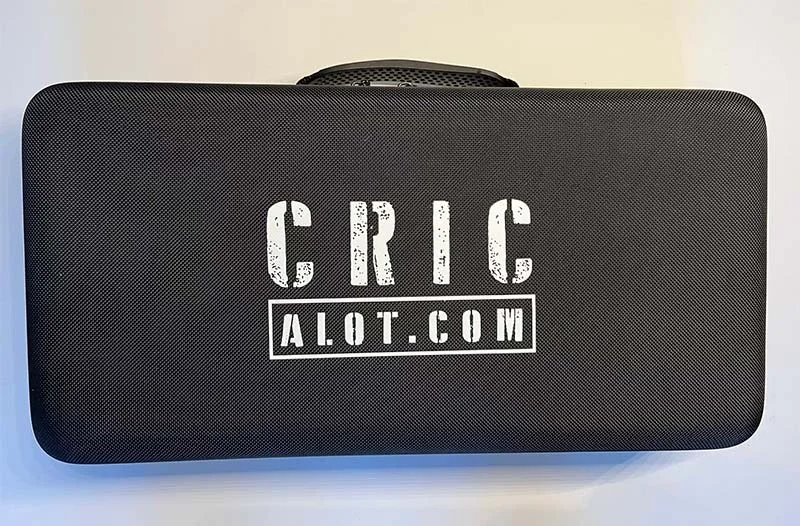
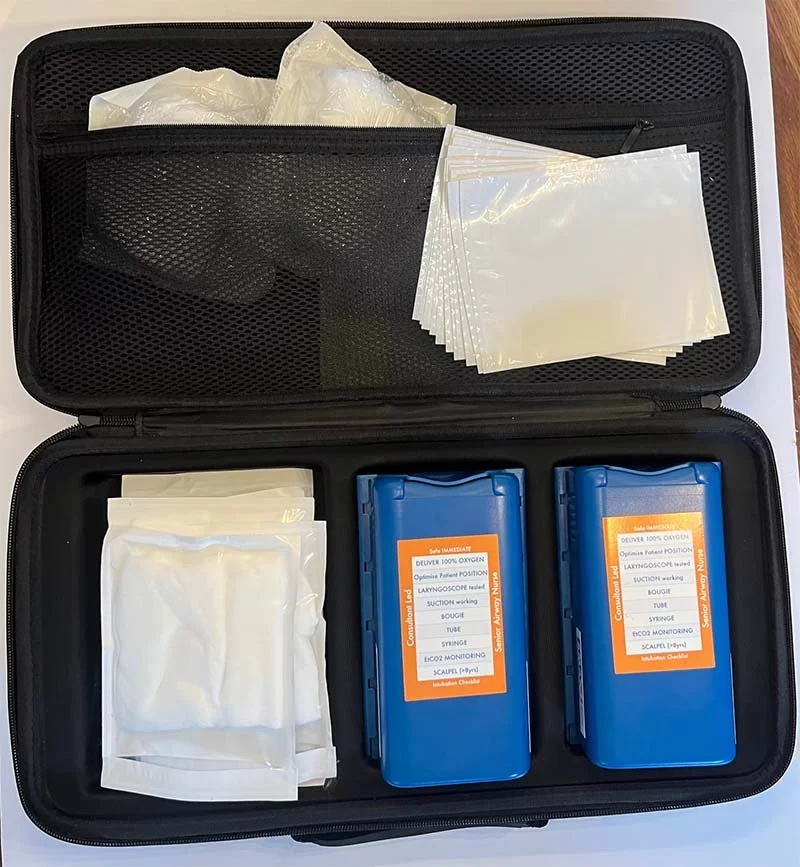
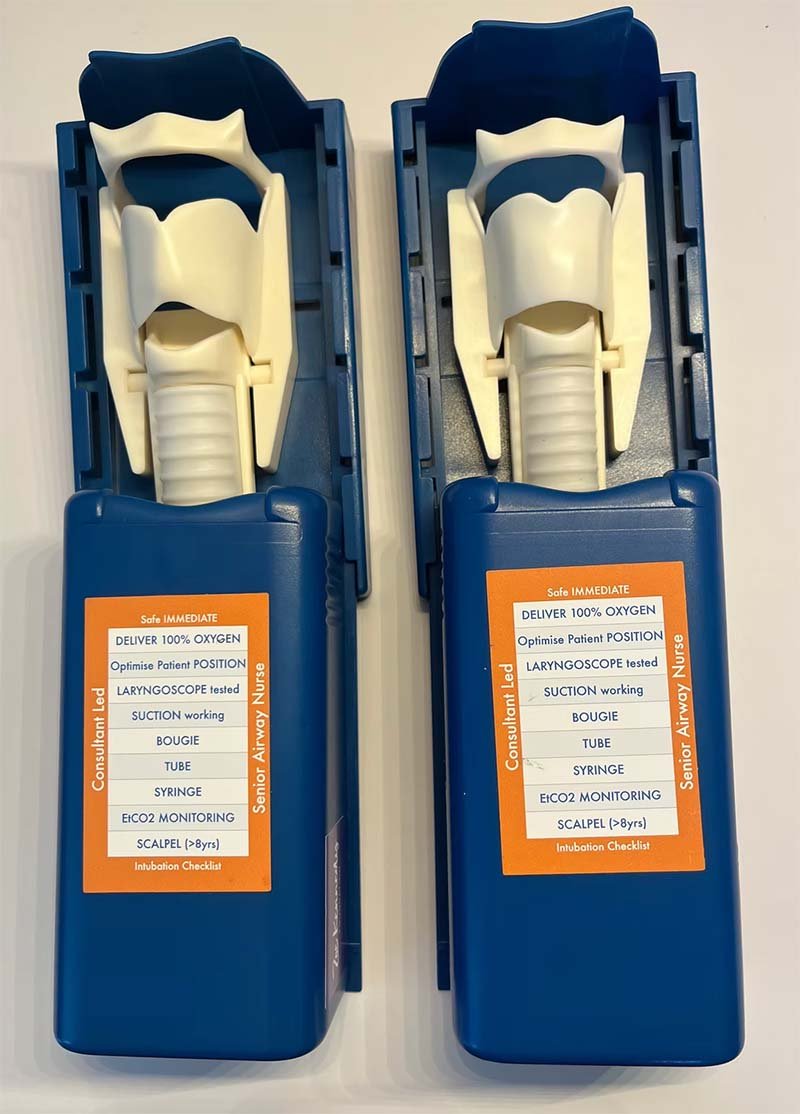
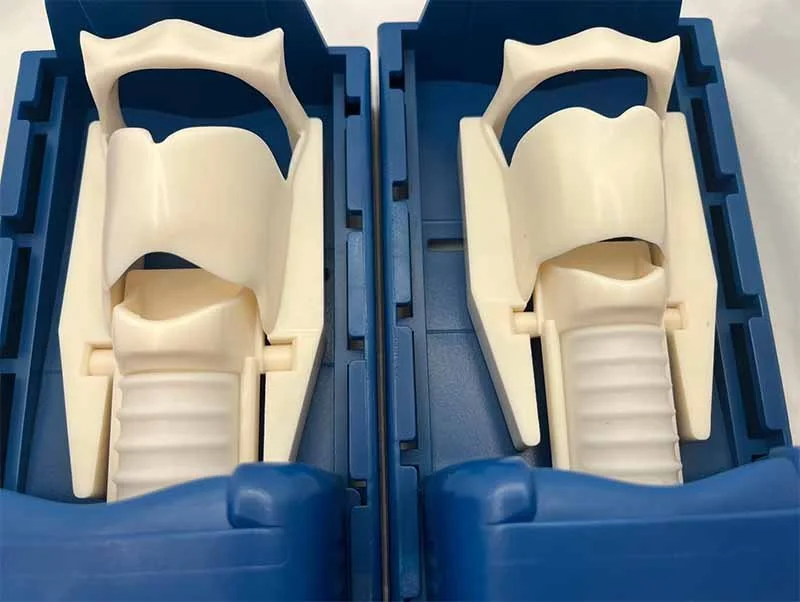
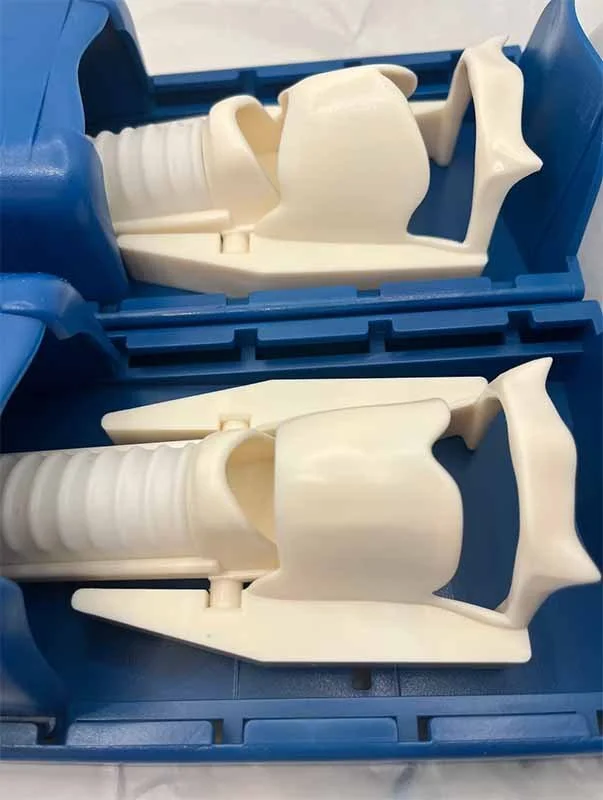
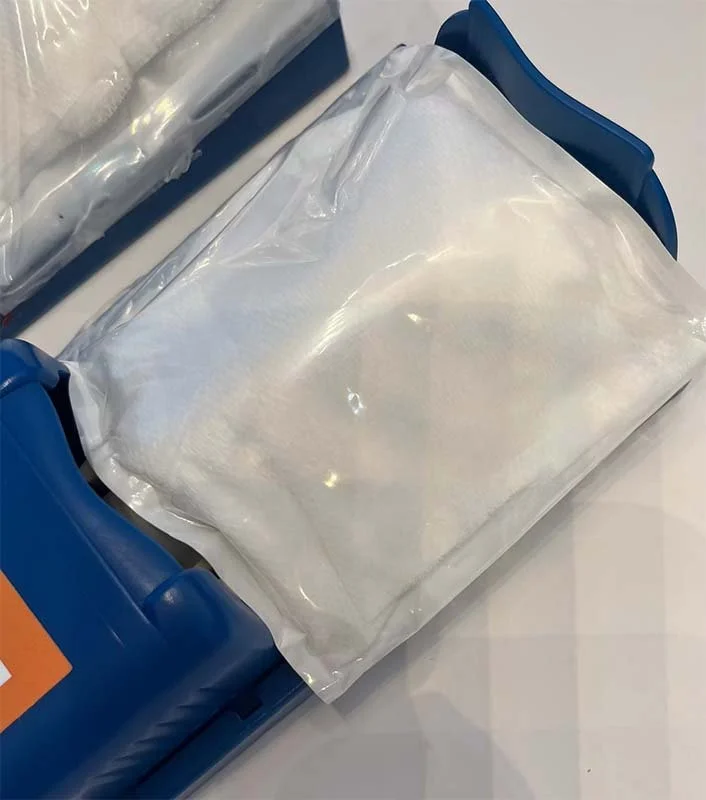
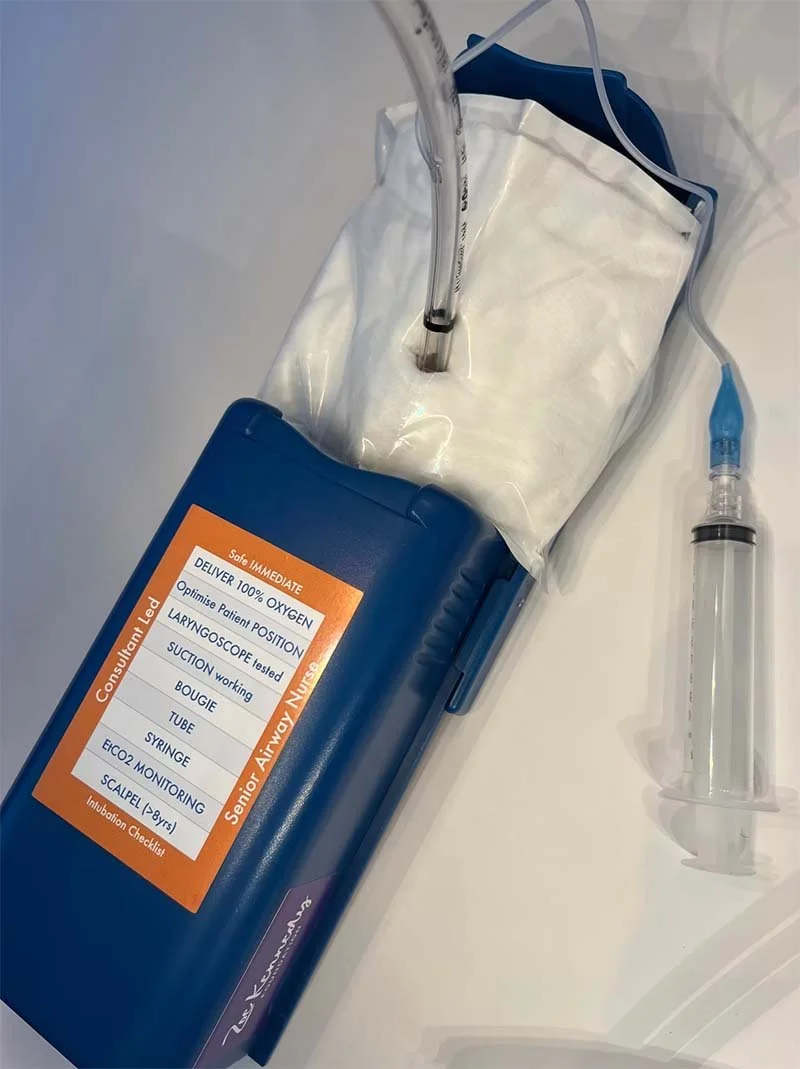
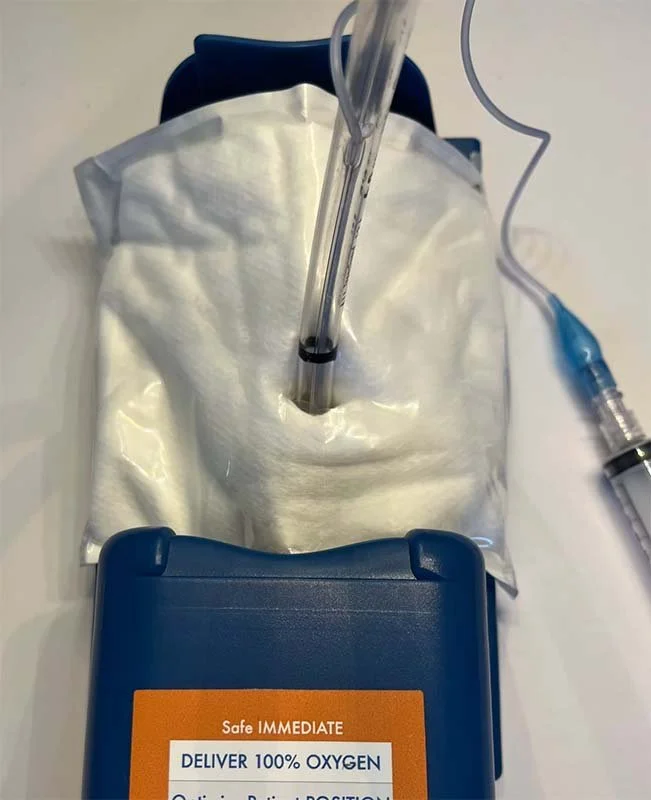
The CRIC-ALOT part trainer is a robust injection moulded model that allows high volume repetition of the scalpel-finger-bougie technique. Designed and created by Professor Richard Levitan from the United States, these trainers are perfect for both training and skills maintenance.
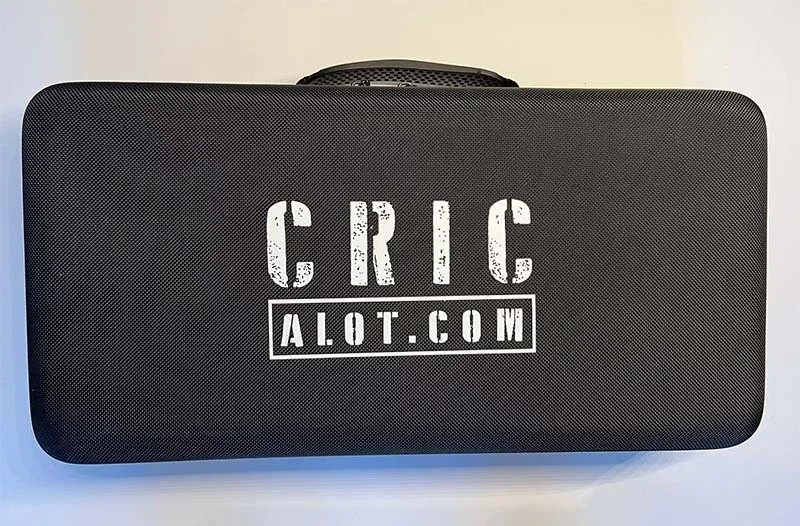
What’s in the case?
x 1 Female model trainer
x 1 Male model trainer
Some sample neck pads, materials to replace the neck pads (plastic pockets and plaster padding),
A zip pocket to store your scalpel, bougie and size 6 tube. (Bougie not included)
Features
Both male and female models. The female models are smaller and have an anatomically correct thyroid cartilage.
Lateral movement of the larynx
A soft trachea to practice palpating and localising the cricoid ring from below
Anatomically correct tracheal length to practice tube depth placement and ensure it
Allows disposible skin and soft tissue to be purchased anywhere.
-
The pads are plastic pockets with 2 or 3 layers of cotton plaster padding inserted inside the pocket. The first layer of plastic represents skin (we find more realistic skin does not add to fidelity or repetition practice), the subcutanous tissue is the plaster padding, and the plastic with paper backing of the doculope is the cricothyroid membrane. Feel free to improvise other options. 10cm x 10cm non woven make up pads or 3 tissues together folded into quarters work just as well!
-
Remove paper backing on the right and left edges only to stick to the blue case edges. Dont remove the paper backing in the middle so the larynx is free to slide laterally without being stuck to the pocket.
-
The pockets are doculope invoice pockets plain white 115 x 150mm and can be purchased from any packaging store - eg 1000 pockets (PDE1000) cost $46 (5 cents a pocket) at surepak.com.au.
-
Pockets can be used vertically and stuck directly on the larynx if you want to fluid fill the pockets and seal them to simulate blood.
-
If your work place does not supply the right 10cm plaster padding rolls for training with the models, plaster padding can be bought from any medical supply shop. Alternatively use cotton makeup pads 10cm or other non woven cotton pads. Even 3 tissues together folded works just as well.
-
Absolutely. But if the padding gets too fluffy eg after more than 5 uses, it can start to catch on your ETT cuff and make it harder to insert detracting from the experience.
Tips for use
-
Always orientate the person to the model before you start.
Identify for them/yourself the:
Chin part of the blue case
Sternum & the suprasternal notch
Compressible, squishy trachea, that has a water bottle type softness.
End of the trachea and that this represents the carina
Overlap between thyroid and cricoid cartilage.
Biggest space is between the hyoid and thyroid and can be erroneously used when spatial orientation is lost under pressure.
-
Before the vertical skin incision, teach both localisation from above and below. Below using the soft/squishy trachea and the first hard bump above being the cricoid ring. Above (less reliable) by identifying the thyroid cartilage.
Teach that the vertical skin incision is essential under pressure and palpation of the CTM with the index finger of the stabilising non dominant hand is much easier once the skin is incised. Teach that you are less likely to lose the hole in the CTM with a vertical incision if there is head extension/flexion. Teach that for a person with lots of soft tissue the incision is longer/bigger than someone where the landmarks are obvious and a smaller vertical incision can be used. Teach that if you get lost finding the CTM, extend the incision closer to the sternal notch so the trachea can be identified and the cricoid ring above it as the first hard bump.
-
The finger is the most important part of the procedure. It ensures the bougie goes into the trachea - both by tactile localisation of the inside of the larynx through the CTM and feeling the bougie slide smoothly next to the finger while in that space. The analogy of the tactile finger and the pleural space in thoracostomy should be made and the danger of subcutanous tube placement highlighted. The feel of the CTM space with the hard smooth back of the cricoid posterior is characteristic. Even better is a finger tip inferiorly into the cricoid ring which gives the feeling of a characteristic hard smooth complete ring to directs bougie placement within.
-
For the first cricothyroidotomy it is common to push the tube too far in. If the tube is inserted in the model further than the cuff "just disapperaing" through the CTM, take the cover off to show the tube beyond the tracheal end (and in a main bronchus).
Purchase the CRIC-ALOT High Repetition Trainer
*Australia only
The CRIC-ALOT cricothyroidotomy trainer is a robust injection-moulded model that allows high-volume repetition of scalpel-finger-bougie training anywhere.
Designed and created by Professor Richard Levitan from the United States, the CRIC-ALOT trainers are perfect for training and skills maintenance.
Please note, we can only sell to critical care clinicians in Australia. For sales outside of Australia, please go to www.airwaycam.com
Features:
Both male and female models. The female models are smaller and have an anatomically correct thyroid cartilage.
Lateral movement of the larynx
A soft trachea to practice palpating and localising the cricoid ring from below
Anatomically correct tracheal length to practice tube depth placement and ensure it is above the carina.
Allows disposable skin and soft tissue to be purchased anywhere.
Shipping Information
Shipping is free within Australia.
All invoices generated clearly stipulate that this trainer is for continuing medical education.