LECTURES
A sequence to aid response to anaphylaxis in a time-critical situation
The rationale underpinning this algorithm, along with its related concepts, is presented in a one-hour lecture by Dr. Ben McKenzie.
Dr. McKenzie has over a decade of experience as a Director of Emergency Medicine Training and more than 15 years as a retrieval specialist. He is deeply committed to advancing the standards of Emergency Medicine.
This lecture has been delivered to approximately two-thirds of Victoria’s Emergency Departments and has been viewed by over 500 emergency medicine consultants and registrars. It is available to watch in full or as a series of six 10-minute episodes, providing flexible viewing options to suit individual schedules.
The Complete Lecture Series
Duration: 67 minutes
The rationale behind this algorithm and related concepts are presented by Dr Ben McKenzie in an hour-long lecture presentation.
The lecture can be watched as one video, and is also available in six, 10-minute video episodes for more flexible viewing options.
Section 1
Recognising Anaphylaxis
Duration: 13 minutes
In section 1/6, Ben welcomes you to the lecture series and discusses often missed diagnosis of paediatric anaphylaxis, diagnostic criteria, severity grading system: Acute allergy is a continuum of disease from mild skin symptoms to cardiac arrest.
Section 2
Part 1: Treating Anaphylaxis
Duration: 16 minutes
In section 2/6, Ben tells the tragic story of James Tsindos. James was a talented pianist and otherwise healthy teenager who entered a metropolitan hospital emergency department with anaphylaxis/asthma and normal vital signs. James died 8 weeks before Max because of almost identical problems in care. Ben discusses anaphylaxis treatment from basics to critical care specialist management before arrest.
Section 3
Arrest Algorithms
In section 3/6, Ben discusses key anaphylaxis & asthma resuscitation concepts that are a "special circumstance", including parallels with trauma. In this video, Ben explores:
The difference betweenb VF vs Hypoxic arrest
Why can asthma and anaphylaxis be considered in the same algorithm
Recognising respiratory arrest; and
Overcoming the problem of decentralised teaching.
Section 4
10 Concepts: The First
Duration: 10 minutes
In section 4/6, Ben covers the "Maximum 4 minutes" until hypoxic ischaemic encephalopathy (the first of 10 concepts informing AMAX4, including the topics: "Why 4 minutes?", Martin and Elaine Bromiley, the impact of time critical care, the "Hard deck, Hard limits and an important - and apt - "Top Gun" analogy.
Section 5
10 Concepts: The Other Nine Concepts
Duration: 11 minutes
In section 5/6, Ben details the other 9 of 10 concepts informing AMAX4. These include:
Why muscle relaxant before sedation
Why ETT and not LMA or Mask
Xtreme Obstructive Ventilation
What airway pressures you can expect
What cognitive assistance you need; and
Understanding the expected course.
Section 6
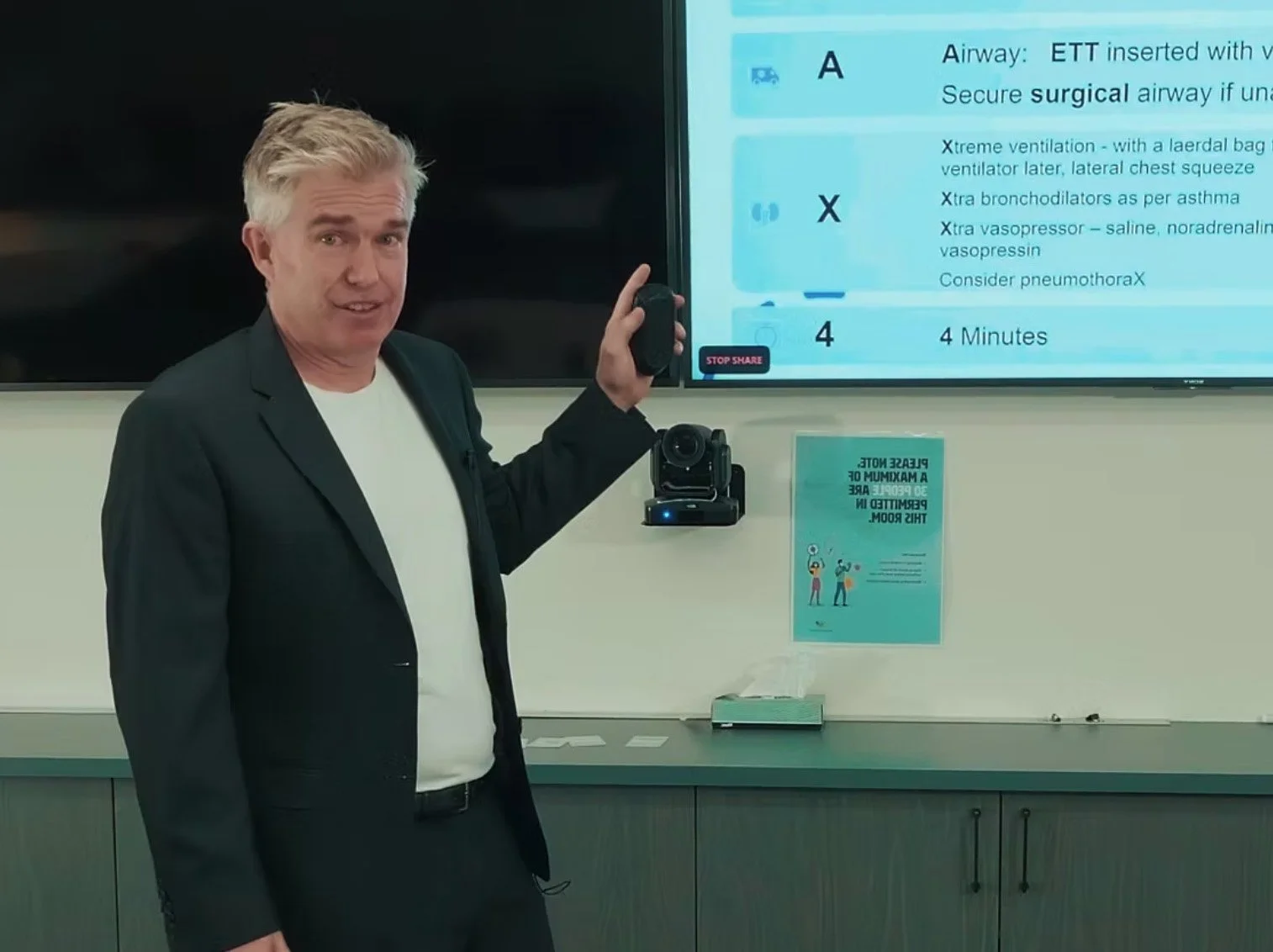
Max
Duration: 10 minutes
In section 6/6, Ben talks about what happened to Max and understand the timeline of Max's care with paramedics and then the Emergency Department.