
Time-Critical Intubation
Ensuring every emergency department can intubate within five minutes
Intubation is a critical intervention for critical care teams in managing hypoxaemic crises. It secures the airway, protects from aspiration, allows ventilation and oxygenation, and is lifesaving when respiratory failure or airway obstruction occurs. These patients, if hypoxaemic cardiac arrest is avoided, do well.
In asthma/anaphylaxis mortality is associated with arrest prior to intubation rather than complications of treatment. This principal applies to most causes of hypoxia.
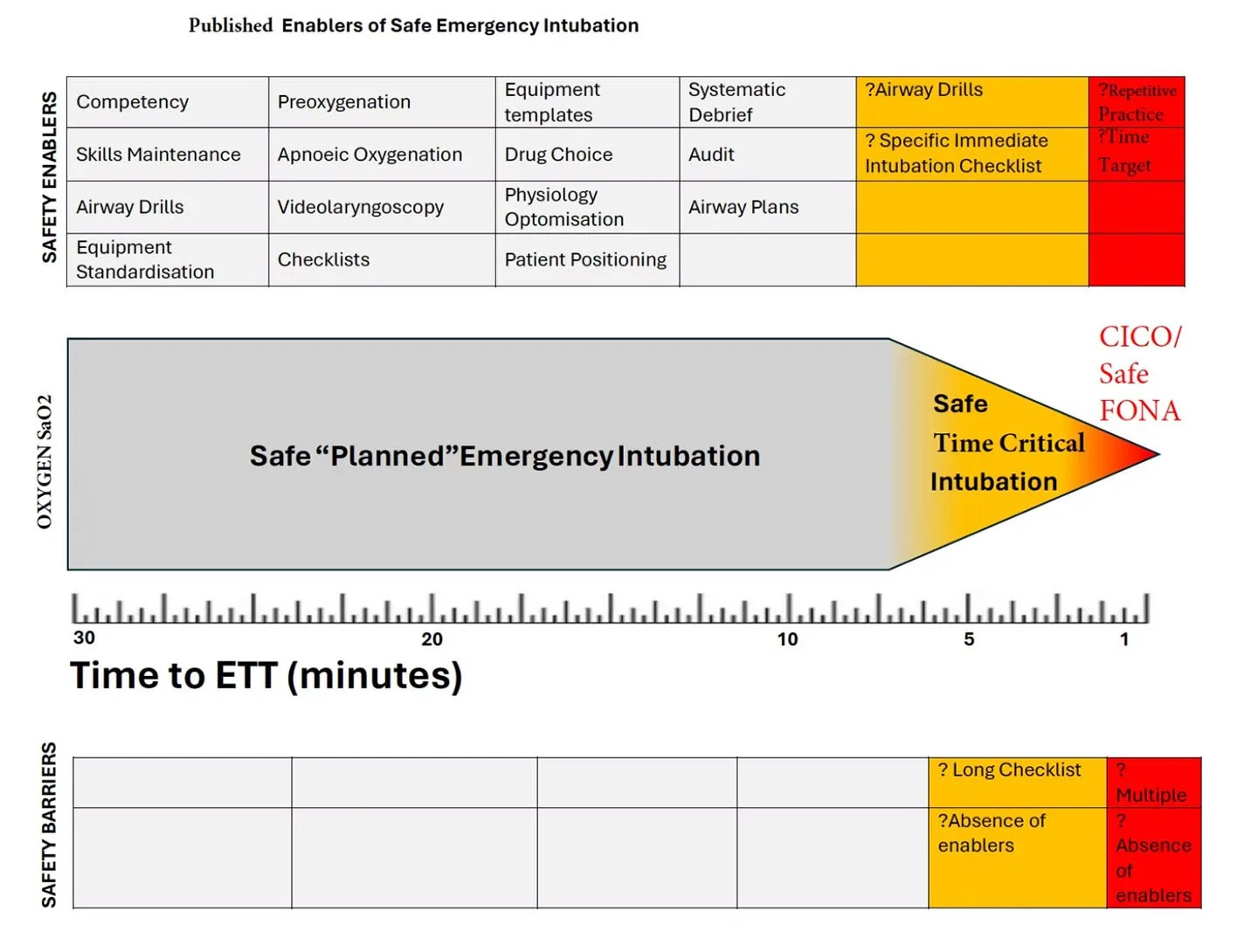
More than five minutes until intubation
Every Emergency Department and Pre-Hospital service must be able to provide safe "planned" emergency intubation where there is time to employ all available safety enablers.
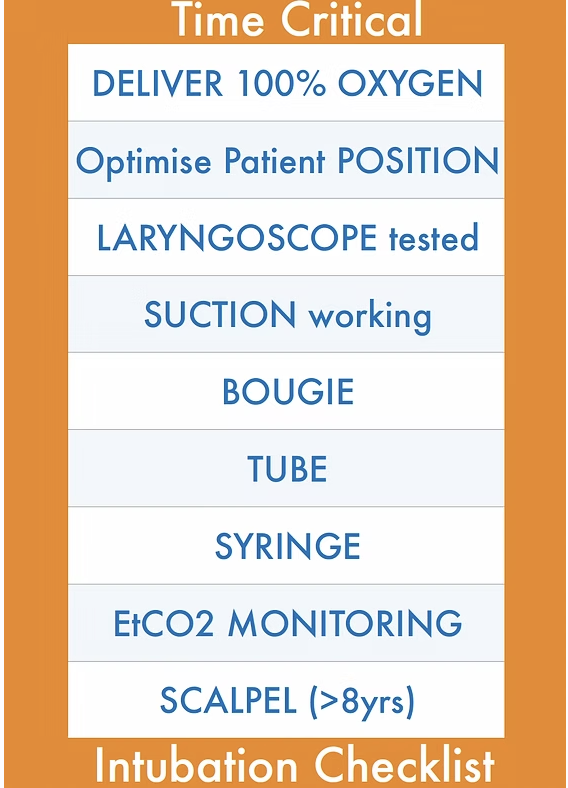
Less than five minutes until intubation
Every intubating critical care team must provide a safe "time critical intubation" where a basic checklist or regular airway team drills enables safety in the face of hypoxia, or impending hypoxia, and the need for a definitive endotracheal tube within five minutes.
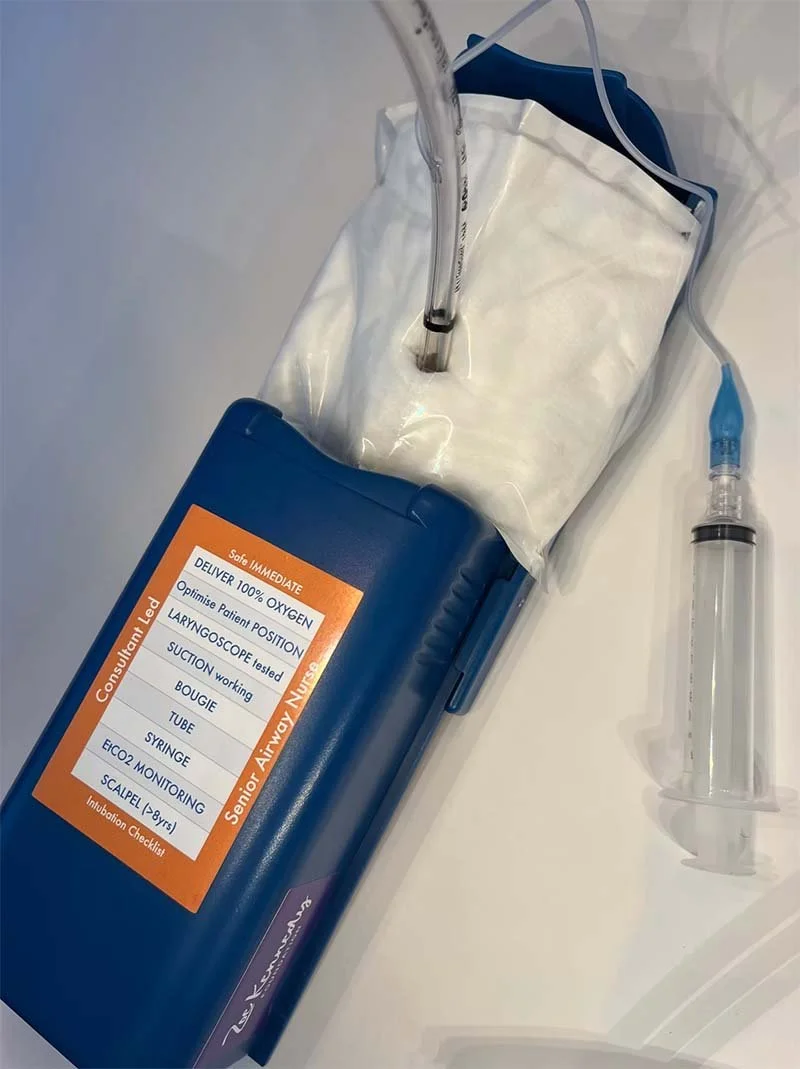
CICO
Every intubating critical care team must be able to deliver a safe scalpel-finger-bougie FONA (>8 years) before hypoxic brain injury occurs.
Hypoxic brain injury occurs within 4 minutes of the hypoxic bradycardic response.
Image: the CRIC-ALOT High Repetition Trainer.
Training tools for critical care clinicians
The CRIC-ALOT Trainer